
Chinese Medicine and the Voice: What It Means When Your Voice Changes

Ever notice how your voice sounds different when you’re nervous, guarded, or disconnected from what you want to say? In Chinese medicine, that shift is not just a speech issue - it can be a signal that something deeper is happening in your body and spirit. In this post, you’ll learn some of how Chinese medicine understands the voice as a bridge between Heaven and Earth, inner truth and rooted safety, why trauma can affect speech, and what it means to “return” to your voice instead of judging it. The perspective comes from a talk by licensed acupuncturist Marielle Ceresa, who blends lived experience, classical Chinese medical theory, and a powerful story about a child whose voice vanished after profound loss.If you’ve ever felt tight in your throat, hesitant to speak, or unsure of the sound of your own voice, this post will help you see it in a new way.
Why Chinese Medicine Sees the Voice as More Than Sound
In everyday life, we usually think of the voice as just a tool for communication. You speak, people hear you, and that’s that.Chinese medicine looks at it differently. The voice is treated as a reflection of the relationship between two deeper systems: the heart and the kidneys. The heart holds the shen, or spirit - your awareness, emotional truth, and consciousness. The kidneys hold jing, or essence - your root, inherited strength, and foundational sense of self.That means your voice is not just about the throat. It is about whether your inner world and your deepest rooted self are able to meet each other and come through together. One of the core principles of Chinese medical theory is the triad of Heaven, Man and Earth; both Heaven (Yang) and Earth (Yin) come together to meet in Man/Humans. The heart represents Yang as it is the home of the Shen (spirit/mind) and also the Fire phase organ (in 5 Phase Element Theory). The Kidneys represent Yin as they hold our Jing (solid essence/DNA) and the Water phase organ in 5 Phase Element Theory. In that framework, voice is what happens when heaven and earth are connected. Expression rises, but it also needs support. If either side is strained - if the spirit wants to speak but the body doesn’t feel safe, or if the body is rooted but the heart is closed - the voice can change.This is one reason Chinese medicine practitioners may pay attention to voice quality, tone, and presence. A voice that feels thin, tense, shaky, or cut off can sometimes point to more than vocal strain. It may reflect a disruption of the Shen (Mind/Spirit) and its connection to the body and the external world.
When Trauma Affects the Voice
One of the most powerful parts of Marielle’s talk was the story of a young girl in an orphanage in India. The child had survived extreme trauma and did not speak when she arrived. Marielle learned that many of the children came without speech at all.From a modern perspective, you might say trauma caused the nervous system to shut down speech. That is true, and it matters. But Chinese medicine adds another layer. It might say the heart’s capacity for expression was disrupted, while the kidney’s sense of safety and rootedness was overwhelmed by fear. Fear is also the emotion of the Water Element, which the kidneys are part of. In that state, the connection between heaven and earth breaks down. The result is not just silence - it is a kind of separation from self.What makes this story so moving is not only that the child eventually spoke again, but that her voice returning felt like a spiritual event. Marielle described it as witnessing the reemergence of a spirit. The child was not simply talking again. She was coming back into alignment between Heaven and Earth.
That phrase matters. It suggests that voice is part of aliveness. When a person begins to speak after silence, something more than sound is restored. There is reconnection, return, and recognition.This is a useful way to think about your own voice, too. Most people will not lose speech entirely, but many people lose access to pieces of their voice in certain settings. You might sound smaller around authority figures, tighter in conflict, or flatter when you’re trying to keep the peace.That doesn’t mean anything is wrong with you. It may simply mean your voice is reacting to safety, threat, history, and habit.
The Voice Can Reveal Where You Feel Unsafe
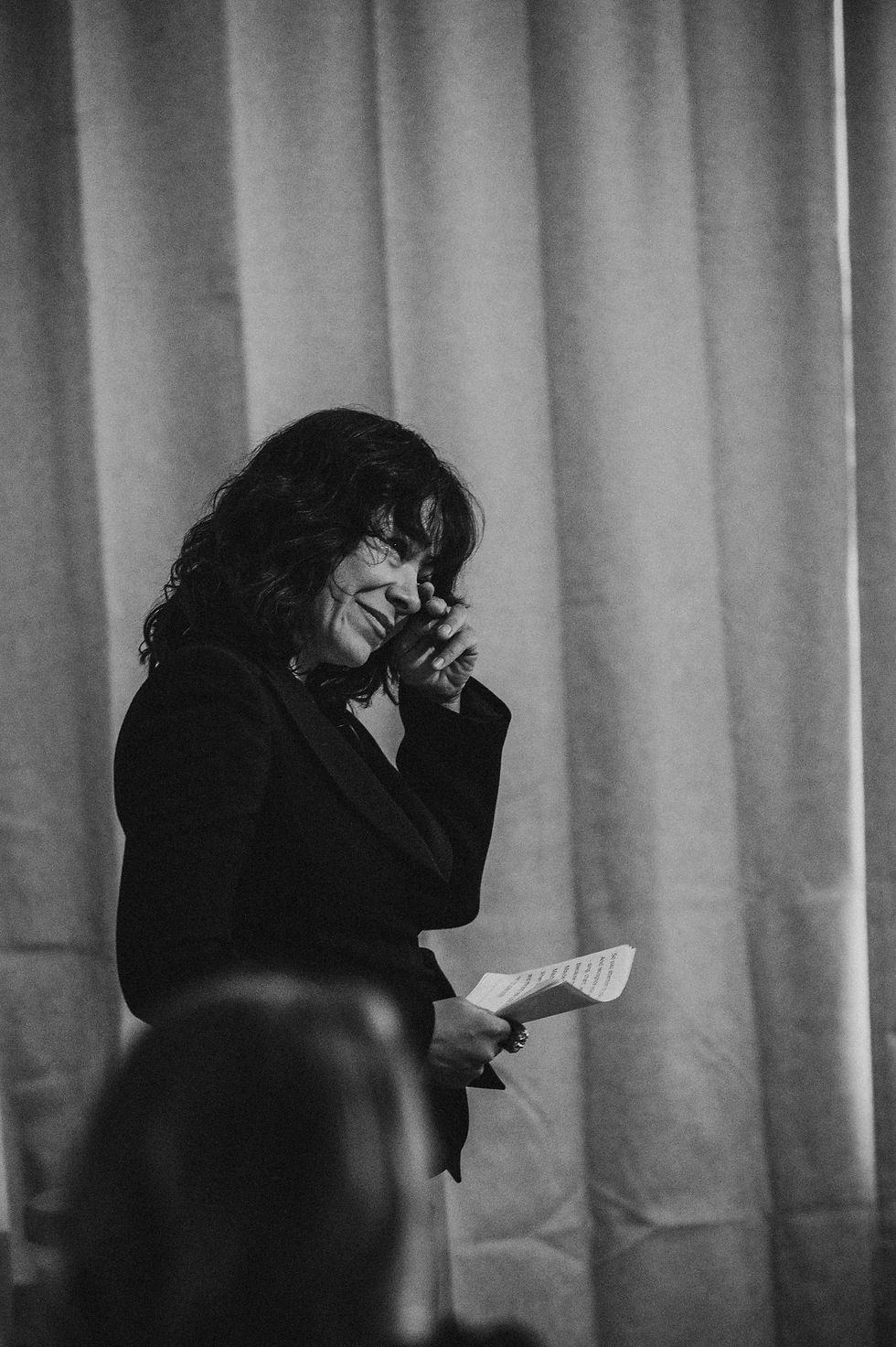
Marielle's own vulnerability made the talk especially relatable. She admitted that she dislikes the sound of her own voice and can hear fear in it when she is nervous. That honesty opens the door to an important idea: the voice often reveals what the body is feeling before the mind fully processes it.If your voice gets higher, tighter, smaller, or less steady in certain conversations, that may be your system protecting you. You may be softening yourself because something feels risky. You may be withholding because you do not yet feel rooted enough to say what is true.Chinese medicine does not frame this as a flaw to fix. It frames it as information.That shift is powerful. Instead of asking, “What’s wrong with my voice?” you might ask:
What is my voice trying to tell me?
Where do I feel safe enough to speak?
Where do I still brace, hide, or disappear?
What kind of support would help me speak more fully?
This is where the body and spirit meet. If the heart wants expression but the body is braced, your voice may reflect that tension. If the root feels shaky, your words may never fully land.The goal is not to force a perfect voice. The goal is to understand what your voice is carrying. Marielle's message was simple but deep: your voice is medicine. It gives you feedback. It shows where you are connected and where you are split. It can tell you when you are speaking from ease and when you are speaking from fear.
How to Return to Your Voice Instead of Perfecting It
A big takeaway from Marielle's talk is that the voice does not necessarily need to be “fixed.” It may need to be welcomed back.That means shifting the goal from performance to relationship. Rather than asking how to sound polished, consider how to sound more true. Rather than trying to eliminate every crack or quiver, notice what helps your voice feel like yours.Here are a few ways to begin:
1. Pay attention to when your voice changes Notice the moments when you speak more softly, more sharply, or more hesitantly. It may happen with certain people, in certain rooms, or when you are discussing certain topics.
2. Create conditions of safety Your voice often opens when your body feels settled. That may mean slowing down, breathing, grounding your feet, or giving yourself a moment before responding.
3. Experiment with sound Marielle suggested singing, yelling, chanting, and whispering. These are not just performance practices. They are ways of exploring the full range of your voice and reconnecting with it physically.
4. Stop treating your voice like a problem You do not need to endlessly criticize the sound of your own voice. You may simply need to meet it with curiosity.This is where Chinese medicine becomes practical. The voice is not only symbolic; it is embodied. If the voice is a bridge between heaven and earth, then anything that supports the heart and kidneys - emotional honesty, rest, safety, rootedness, and connection - may help that bridge hold more clearly.
What the Story of the Little Girl Teaches Us
The orphanage story is the emotional center of Marielle’s message because it shows the stakes of voice in the most human way possible. A child who had endured extreme harm did not speak. Then, slowly, through care and love, voice returned.That return was not framed as a medical trick or a quick fix. It was framed as reintegration. Yin and yang, heaven and earth, spirit and body - all coming back into relationship so the spirit could settle again in the heart.That is a beautiful idea to carry into your own life.Most of us are not in obvious crisis, but many of us live with smaller separations: the words we want to say but don’t, the opinions we mute, the parts of ourselves we edit depending on who is listening. Over time, those small separations can make us feel less whole.The story invites a gentler question: what would help you come back online?Maybe it’s rest. Maybe it’s therapy. Maybe it’s a hard conversation. Maybe it’s vocal practice, meditation, or time in nature. Maybe it’s finally trusting that your voice does not have to be perfect to be powerful.
Frequently Asked Questions
What does Chinese medicine say about the voice?
Chinese medicine sees the voice as a reflection of the relationship between the heart and kidneys. The heart relates to spirit and expression, while the kidneys relate to root and essence. When those systems are in harmony, the voice tends to feel more open and connected.
Can trauma affect your voice?
Yes. Trauma can affect how safely your body feels, which may change speech, tone, volume, or willingness to speak. In both modern and classical terms, voice changes can reflect deeper disruption in safety and expression.
Do I need vocal exercises to improve my voice?
Not necessarily. Marielle’s point was that the voice may need to be returned to, not perfected. For many people, safety, grounding, and self-trust matter just as much as technique.
Why does my voice sound different when I’m nervous?
Nervousness can create tension in the body and throat, which changes how sound comes out. In Chinese medicine terms, that can reflect a disconnect between what you want to express and how rooted you feel in the moment.
How can I reconnect with my voice?
Start by noticing when your voice changes and what situations trigger that shift. Practices like breathwork, chanting, singing, whispering, or simply speaking more slowly can help you explore your voice with less judgment.
Conclusion
Chinese medicine offers a rich way to understand the voice: not as a mechanical output, but as a living bridge between spirit and root, expression and safety. Muriel Seresa’s story shows that when voice returns, something deeper than speech returns with it. That is true whether you are recovering from trauma or simply trying to speak more honestly in everyday life.The next time your voice feels tight, small, or shaky, consider that it may be giving you useful information. Instead of pushing it aside, listen. Your voice may be pointing you back toward yourself.Want to go deeper? Listen to the full talk and explore more on Chinese medicine, healing, and embodiment.


Comments